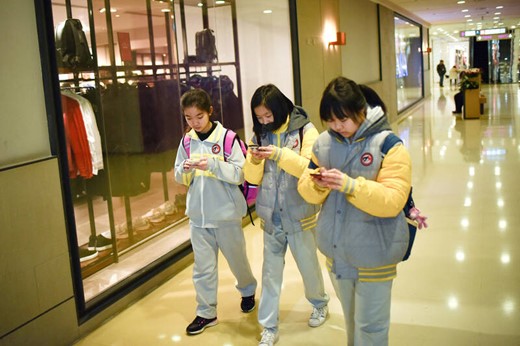
When the weather is nice, the Buxton boarding school moves lunch outside. Students, faculty and guests grab their food from the kitchen, and eat together under a white tent that overlooks western Massachusetts’ Berkshire mountains.
As the close of the school year neared last June, talk turned to final assignments (the English class was finishing Moby-Dick) and end-of-year fun (there was a trip planned to a local lake). It was, in most ways, a typical teenage afternoon — except that no one was on their phones.
Buxton was wrapping up the first year of a simple yet novel experiment: banning cellphones on campus. Or, rather, smartphones.
Instead, the school gave everyone on campus — including staff — a Light Phone, that is, a “dumb” phone with limited functionality. The devices can make calls, send texts (slowly) and can’t load modern applications; instead coming with deliberately cumbersome versions of music and mapping apps. They are about the size of a deck of cards, with black and white screens.
As one student put it: “It’s like the demon baby of an iPad and a Kindle.”
Most everyone agrees, however, that the school is better off with these hell devices. (And yes, that includes students.) There are fewer interruptions during class, more meaningful interactions around campus, and less time spent on screens.
You need to be logged in to view your posts.